
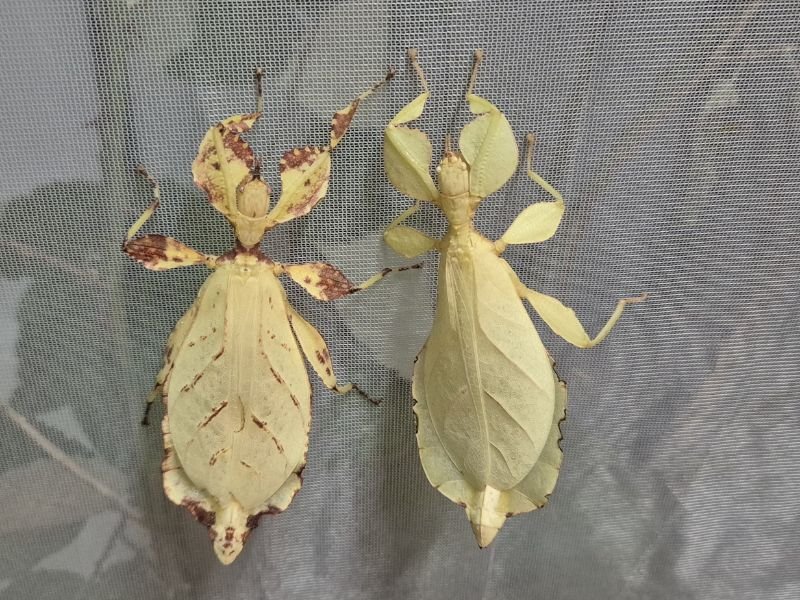
Phyllium letiranti “Tataba”
Price range: £6.00 through £30.00
Scientific Name: Phyllium letiranti “Tataba”
Common Name: Tataba Leaf Insect
Phyllium letiranti “Tataba” is a large and impressive leaf insect with exceptional camouflage. Females develop broad, leaf-like bodies, while males remain slimmer and can fly once mature.
🍃 Captive-Bred | 🌿 Leaf Mimic | 📏 Large Species | 🌙 Nocturnal
Description
Scientific Name: Phyllium letiranti “Tataba”
Common Name: Tataba Leaf Insect
Overview
Phyllium letiranti “Tataba” is a striking leaf insect from Peleng Island, Indonesia. It combines impressive size with exceptional leaf mimicry.
Adult females develop broad, rounded bodies with leaf-like veins and irregular edges. Their colour can include green, yellow, brown and orange.
Males remain smaller and slimmer than females. However, they develop functional wings and can fly once mature.
Females usually reach around 8.5–9.5 cm. Meanwhile, adult males commonly reach about 7 cm.
Young nymphs look very different from the adults. They hatch with dark brown colouration and move quickly through the enclosure.
After feeding, their colours gradually change. Green, brown and mixed colour forms may appear as they grow.
This species usually remains calm and motionless during the day. Therefore, its camouflage can make it surprisingly difficult to spot.
At night, the insects become more active. They climb across their food plants and feed on fresh leaves.
Phyllium letiranti “Tataba” suits keepers who can provide fresh food and stable conditions. It also needs enough height for safe moulting.
Native Habitat
Phyllium letiranti comes from Peleng Island in Indonesia. The “Tataba” culture originates near Tataba village on the island.
The species inhabits warm tropical environments with abundant vegetation. Its appearance allows it to disappear among living and ageing leaves.
Wild specimens have eaten guava and mango leaves. However, captive cultures also accept several suitable food plants.
Warm temperatures and regular rainfall help maintain humid conditions. Nevertheless, natural airflow prevents the habitat from becoming stagnant.
A captive enclosure should copy these conditions. Therefore, keep the enclosure warm, humid and well ventilated.
Care
Enclosure
House Phyllium letiranti “Tataba” in a tall, well-ventilated enclosure.
Leaf insects need vertical space to moult safely. Therefore, the enclosure should measure at least three times their body length in height.
A 30 × 30 × 45 cm enclosure can house a small adult group. Larger groups will need additional space.
Mesh enclosures work especially well. They provide ventilation and give the insects secure surfaces for climbing.
Ensure that branches and food plants reach across the enclosure. This helps young nymphs locate their food more easily.
Avoid overcrowding the enclosure. Crowded conditions can damage limbs and interfere with successful moults.
Temperature
Maintain a daytime temperature of approximately 22–26°C.
Temperatures can fall to around 18–20°C overnight. This drop reflects the natural daily temperature cycle.
Normal room temperatures may suit this species in many homes. However, always monitor the enclosure with a reliable thermometer.
Avoid temperatures above 28°C for long periods. Excessive heat can cause stress, dehydration and moulting problems.
Keep the enclosure away from direct sunlight. Sunlight can overheat a mesh or glass enclosure very quickly.
Humidity
Aim for approximately 65–75% humidity.
Lightly mist the enclosure with clean, chlorine-free water. Allow the enclosure to dry partly before spraying again.
Regular misting provides drinking droplets. Furthermore, it supports successful moulting and healthy development.
However, excessive moisture can create mould and stagnant conditions. Good airflow remains just as important as humidity.
Monitor the enclosure rather than following a rigid spraying schedule. Warmer rooms may dry faster than cooler rooms.
Substrate
A simple substrate makes cleaning and egg collection easier.
Suitable options include:
- Paper towel
- Coco fibre
- Vermiculite
- A thin layer of organic soil
Paper towel works well for nymphs. It allows quick cleaning and makes fallen eggs easy to find.
Coco fibre can help maintain humidity. However, avoid keeping it permanently wet.
Remove droppings, dead leaves and mouldy plant material regularly. Clean conditions reduce bacterial and fungal growth.
Feeding
Bramble works as the main captive food plant for Phyllium letiranti “Tataba”.
The species also accepts:
- Raspberry
- Salal
- Guava
- Mango
Bramble remains widely available in the UK throughout much of the year. It also stays fresh for several days in water.
Always collect leaves from pesticide-free areas. Avoid roadsides, sprayed gardens and polluted locations.
Wash all food plants before use. Then, place the stems inside a container of fresh water.
Cover the container opening with mesh, foil or tissue. This prevents nymphs from falling into the water and drowning.
Replace wilted leaves before they become unusable. The insects should always have access to fresh food.
Young nymphs may struggle to bite intact leaves. Therefore, cut the leaf edges to expose softer feeding points.
Older, darker bramble leaves often work better than very soft new growth. Fresh shoots may not suit delicate nymphs.
Moulting
Leaf insects hang upside down when they moult.
They need enough empty space below their body to leave the old skin. Therefore, enclosure height remains essential.
Never move an insect during a moult. Even slight disturbance can cause falls, deformities or lost limbs.
Maintain suitable humidity during this stage. Dry conditions can trap the insect inside its old skin.
Remove dead or dried food stems that restrict movement. However, avoid major enclosure maintenance near a moulting insect.
After moulting, the new skin remains soft. Allow the insect to harden before handling or disturbing it.
Behaviour and Handling
Phyllium letiranti “Tataba” usually displays calm and slow behaviour.
However, young nymphs can run quickly when disturbed. Adult males may also fly or jump from the keeper.
Females often grip branches firmly. Never pull them away, as this can damage their feet or legs.
Instead, place a hand or branch in front of the insect. Then, allow it to climb across naturally.
Keep handling brief and gentle. Leaf insects have delicate limbs and can suffer damage from careless movement.
This species may sway gently while walking. The movement copies a leaf shifting in the wind.
Group Housing
Several individuals can live together peacefully.
However, provide enough food, space and moulting surfaces for every insect.
Do not mix different leaf insect species. Eggs and young nymphs can look very similar, which may contaminate breeding cultures.
Keep the full locality name with the colony. The correct culture name is Phyllium letiranti “Tataba”.
Separate crowded groups as they grow. Larger females need much more space than newly hatched nymphs.
Breeding
Phyllium letiranti “Tataba” breeds readily under suitable captive conditions.
Males mature faster than females. At suitable temperatures, males may mature within four to five months.
Females may take around five to six months. However, temperature and feeding can affect development time.
Adult males use their wings to reach females. Mating may begin a few weeks after the final moult.
Females drop their eggs onto the enclosure floor. Therefore, keep the base clean and check it regularly.
A female may lay one or two eggs each day. Egg production can continue for several months.
Collect the eggs carefully and place them in a ventilated incubation container.
Use slightly damp vermiculite, coco fibre or paper towel. Keep the incubation medium moist but never soaked.
Maintain the eggs at approximately 20–25°C. Also, provide a natural light and dark cycle.
Eggs commonly hatch after four to five months. However, some may take seven months or longer.
Check the incubation container regularly for mould. Remove badly affected eggs before mould spreads.
Newly hatched nymphs need immediate access to fresh food. Cut the leaf edges to encourage their first meals.
Females may also produce eggs without mating. This process, called parthenogenesis, usually produces female offspring.
Captive-Bred
Our Phyllium letiranti “Tataba” are captive-bred.
Captive breeding reduces demand for wild-collected leaf insects. Therefore, it supports more responsible invertebrate keeping.
Captive-bred nymphs already recognise commonly available food plants. They also avoid many stresses linked with collection and importation.
Prepare the enclosure before your insects arrive. Provide fresh bramble, safe drinking droplets and enough moulting space.
With stable conditions and regular feeding, Phyllium letiranti “Tataba” becomes an impressive living leaf display.
Additional information
| Amount | Singular Nymph, 6 Nymphs |
|---|
Reviews
There are no reviews yet.