
Armadillidium klugii ‘Clown’
Price range: £10.00 through £18.00
Scientific Name: Armadillidium klugii
Common Name: Clown Isopod
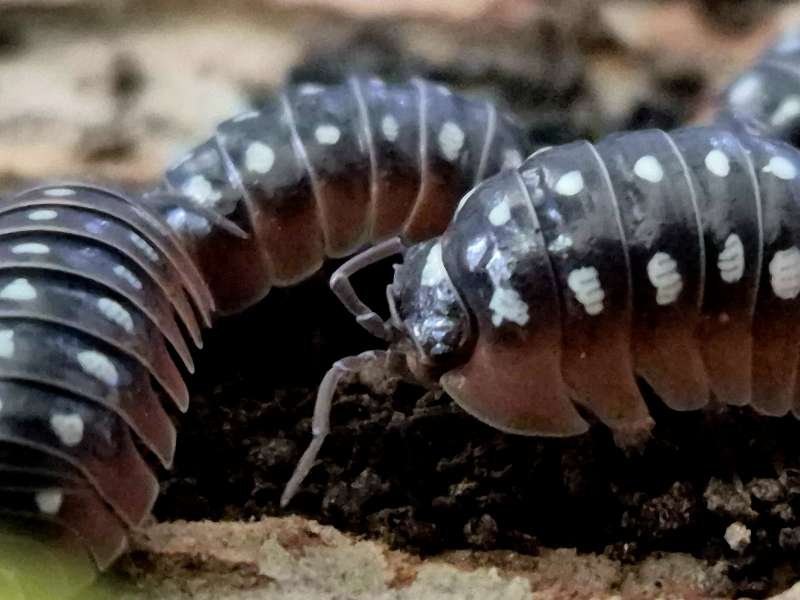
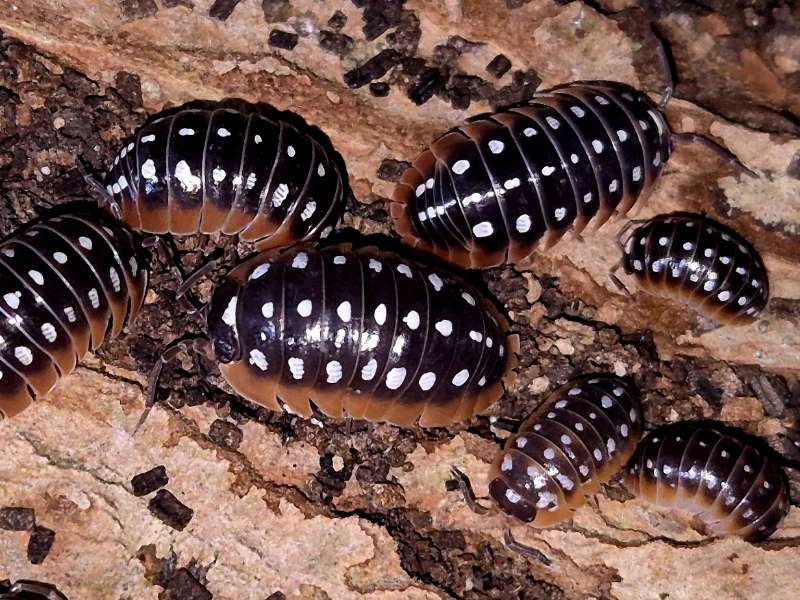
Armadillidium klugii, commonly known as the Clown Isopod, is a striking terrestrial isopod with bold white, yellow and orange markings. This attractive species thrives in a well-ventilated setup with leaf litter, rotten hardwood and a clear moisture gradient.
🎪 Captive-Bred | 🍂 Detritivore | ⚪ Rolls into a Ball | 🌿 Bioactive Species
Description
Scientific Name: Armadillidium klugii
Common Name: Clown Isopod
Overview
Armadillidium klugii, commonly known as the Clown Isopod, is a colourful terrestrial isopod from the Balkan region.
Its dark body features rows of white, cream, yellow or orange markings. These bold spots create the distinctive pattern behind its common name.
Some individuals also develop reddish markings around the edges of their body segments. As a result, mature colonies can display impressive natural variation.
Clown Isopods can grow to around 2 cm in length. Their size and strong pattern make them easy to observe inside a naturalistic enclosure.
Like other members of the genus Armadillidium, this species can roll into a tight ball. This behaviour helps protect its softer underside from danger.
Although Clown Isopods tolerate fairly dry conditions, they still need access to a damp retreat. A well-designed moisture gradient remains essential for successful care.
This species usually breeds more slowly than many common isopods. Therefore, it suits patient keepers who enjoy watching a colony develop over time.
Clown Isopods can also support a bioactive enclosure. They consume decaying plant matter and help recycle organic waste.
However, keepers should establish a strong colony before using them as a clean-up crew. Their slower reproduction makes small colonies vulnerable to losses.
Their striking pattern, manageable care and fascinating behaviour make them popular with collectors. They also make an excellent display species for dedicated isopod enclosures.
Native Habitat
Armadillidium klugii originates from the Balkan region along the Adriatic coast. Its natural range includes areas of Croatia and Montenegro.
The species inhabits rocky landscapes, scrubland, woodland edges and limestone-rich environments. These habitats often experience warm, dry surface conditions.
However, Clown Isopods avoid prolonged exposure to dry air. Instead, they shelter beneath stones, bark and decaying wood.
These hiding places trap moisture and provide cooler conditions. They also protect the isopods from predators and direct sunlight.
Leaf litter and rotting wood collect between rocks and inside sheltered crevices. This material provides both food and cover.
The natural habitat rarely remains uniformly wet. Instead, dry surface areas sit beside humid pockets beneath heavy cover.
A captive enclosure should recreate this contrast. Provide a dry main area alongside a permanently damp retreat.
Care
Enclosure
House Clown Isopods in a secure plastic or glass enclosure with good ventilation.
A small starter colony can live in a container measuring around 5–10 litres. However, larger colonies will need more space.
Use a secure lid because young isopods can enter narrow gaps. Fine ventilation holes will improve airflow without allowing escapes.
Provide plenty of floor space rather than excessive height. Clown Isopods spend most of their time on or beneath the substrate.
Keep the enclosure away from direct sunlight. Sunlight can quickly overheat the container and dry the damp area.
Substrate
Provide at least 5–8 cm of nutrient-rich substrate.
A suitable mixture can include:
- Organic topsoil
- Rotten hardwood
- Leaf mould
- Coco fibre
- Crushed leaf litter
- Sphagnum moss
Rotten hardwood and leaf litter form essential parts of the diet. Therefore, mix both materials throughout the substrate.
Avoid using coco fibre as the only substrate. It holds moisture but provides very little nutrition.
Never use soil containing fertilisers, pesticides or artificial additives.
Moisture and Ventilation
Create a clear moisture gradient across the enclosure.
Keep around one-quarter of the substrate damp. Meanwhile, allow the remaining area to stay noticeably drier.
Place sphagnum moss beneath cork bark at the damp end. This creates a humid retreat for moulting and young isopods.
Add water directly to the damp area when necessary. Avoid spraying the entire enclosure.
Clown Isopods dislike constantly wet conditions. Excess moisture may reduce activity and cause colony problems.
However, complete dryness can also prove dangerous. Isopods need moisture to breathe and moult successfully.
Good ventilation helps balance these conditions. It also reduces mould and stagnant air.
Temperature
Maintain temperatures between approximately 18–26°C.
Normal indoor temperatures usually suit this species. However, colony growth may slow during cooler periods.
Temperatures around 21–24°C support regular activity and breeding.
Avoid prolonged temperatures above 28°C. Excess heat can dry the enclosure and stress the colony.
Do not place a heat mat beneath the enclosure. Bottom heating can remove the cool, damp refuge that isopods need.
Hides and Decoration
Provide several pieces of cork bark across the substrate.
Place one hide over the damp area and another over the dry area. This arrangement allows the colony to choose suitable conditions.
Flat bark also creates secure gathering spaces. You may find most of the colony resting beneath one piece during the day.
Add dried leaves across the surface. Oak, beech and other safe hardwood leaves work well.
Replace the leaf litter before the colony consumes it completely. A constant supply supports long-term health.
Feeding
Clown Isopods mainly eat decaying leaves and rotten hardwood.
These foods should always remain available. Supplemental foods can add variety and support reproduction.
Suitable extras include:
- Courgette
- Carrot
- Sweet potato
- Squash
- Mushroom
- Fish flakes
- Dried shrimp
- Bee pollen
Offer small portions once or twice each week. Remove fresh food before it develops heavy mould.
Clown Isopods benefit from occasional protein. However, excessive protein can attract mites and create unpleasant smells.
Provide a constant calcium source for healthy exoskeleton growth.
Suitable calcium sources include crushed oyster shell, cuttlefish bone and limestone. Replace them whenever the colony consumes them.
Cleaning
Avoid replacing the entire substrate during routine maintenance.
The substrate contains beneficial microorganisms and young isopods. A complete change can disrupt the colony.
Instead, remove mouldy food and obvious waste when necessary. Then, top up the leaf litter and rotten wood.
Springtails make an excellent addition. They consume mould and help maintain a balanced enclosure.
Behaviour
Clown Isopods often hide during the day. However, they may become more visible during feeding or after dark.
They usually gather beneath cork bark and inside the upper substrate layers.
When disturbed, they may freeze, run for cover or roll into a ball. This defensive behaviour gives the genus its familiar pill-bug appearance.
Although peaceful, they may compete for food in crowded conditions. Therefore, provide enough leaf litter, hides and floor space.
Avoid frequent handling. Their shell provides protection, but drops and rough movement can still cause injuries.
Instead, move them with a soft brush, spoon or small container.
Breeding
Armadillidium klugii breeds sexually and requires both males and females.
Females carry developing young inside a fluid-filled brood pouch. This pouch sits beneath the body.
When development finishes, the female releases tiny white juveniles called mancae. These young resemble miniature adults but lack their full colour.
The markings become clearer as the juveniles grow and moult.
Clown Isopods often reproduce more slowly than common species such as Porcellionides pruinosus. Therefore, a new colony may need time to settle.
Stable conditions encourage breeding. Maintain a reliable moisture gradient and provide constant access to nutritious food.
Calcium and occasional protein also support reproduction. However, avoid overfeeding the colony.
Do not disturb the substrate unnecessarily when young appear. Tiny mancae can hide deep within the upper layers.
A starter group with several individuals offers the best chance of including both sexes. It also provides stronger genetic diversity.
Allow the colony to grow before removing individuals. A well-established population handles minor changes much better than a small group.
Captive-Bred
Our Armadillidium klugii Clown Isopods are captive-bred.
Captive breeding reduces demand for wild-collected animals. It also supports responsible and sustainable invertebrate keeping.
Captive-bred isopods usually adjust well to established enclosures. However, sudden changes in temperature or moisture can still cause stress.
Prepare the enclosure before the colony arrives. Add deep substrate, rotten hardwood, leaf litter and a calcium source.
Most importantly, create a clear moisture gradient. The colony must always have access to both damp and dry areas.
With stable care and patience, Clown Isopods can develop into a colourful and rewarding colony.
Additional information
| Amount | 10, 20 |
|---|
Reviews
There are no reviews yet.