
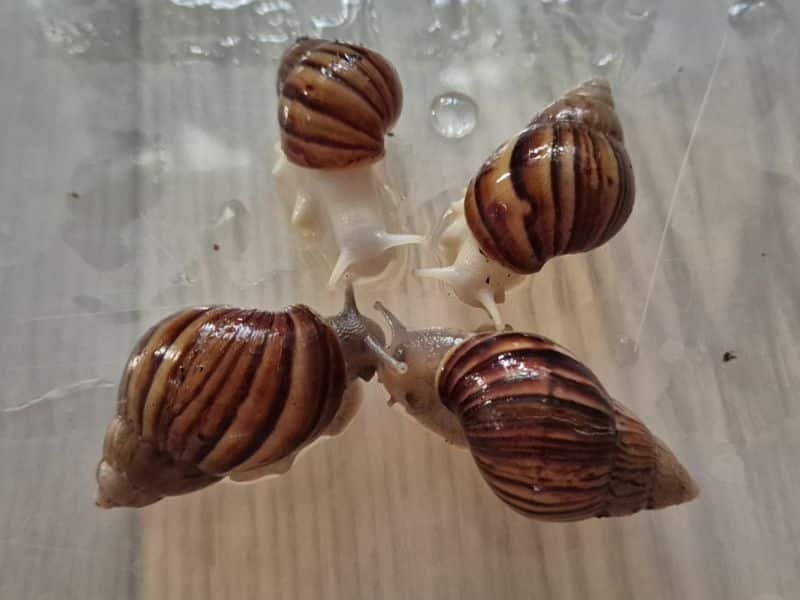
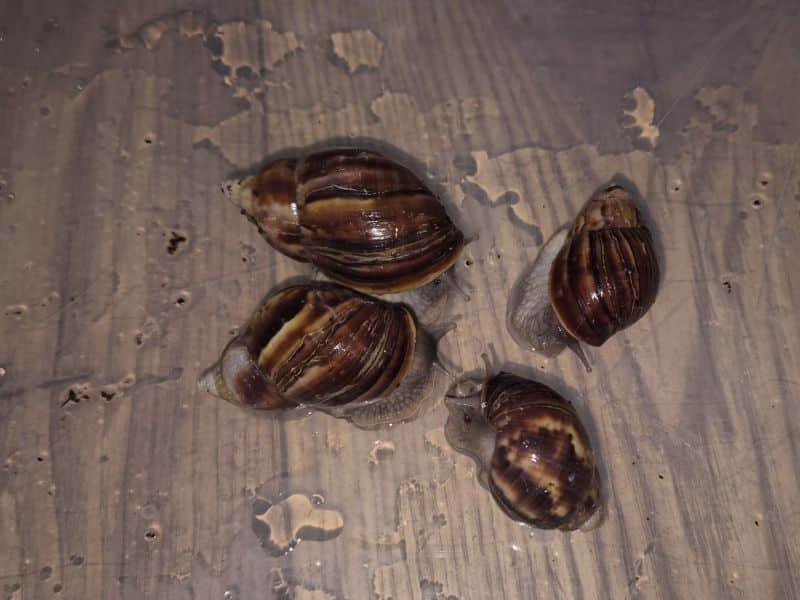
Lissachatina fulica
Price range: £5.50 through £6.50
Scientific Name: Lissachatina fulica
Common Name: Giant African Land Snail
Lissachatina fulica is a large, active land snail with a distinctive conical shell and naturally dark body. Easy to maintain with deep substrate, warmth, humidity and constant access to calcium, they make fascinating display animals for invertebrate keepers.
Captive-bred • Large land snail • Easy to maintain • Active species • Requires constant calcium
Description
Scientific Name: Lissachatina fulica
Common Name: Giant African Land Snail
Lissachatina fulica is one of the best-known giant land snails in the hobby. These large, active snails develop impressive conical shells with brown, tan and darker banding, while the body remains naturally dark and heavily textured.
They are straightforward to maintain once their basic needs are met and can become surprisingly interactive. Their size, feeding behaviour and constant exploration make them excellent display animals for keepers who enjoy larger terrestrial invertebrates.
Native Habitat
Lissachatina fulica originates from East Africa, where it inhabits warm environments with access to humid soil, dense vegetation and sheltered areas. The species has also established populations in many tropical and subtropical regions outside its native range.
In the wild, these snails often spend dry periods beneath vegetation, leaf litter or within the soil. Activity usually increases during humid weather, after rainfall and throughout the evening and night.
Lissachatina fulica Care Information
Adult Shell Size: Commonly around 10–15 cm, although size varies
Temperature: Around 21–26°C
Humidity: Approximately 70–90%
Diet: Primarily herbivorous and detritivorous
Difficulty: Easy
Lifestyle: Terrestrial and burrowing
A secure plastic or glass enclosure works well for Lissachatina fulica. Provide plenty of floor space, good ventilation and enough substrate for the snail to bury itself fully.
These snails climb extremely well and will investigate enclosure walls, lids and ventilation points. Always use a secure lid because a poorly fitted enclosure can quickly become an escape route.
Substrate
Provide a deep layer of soft, moisture-retentive substrate. Organic topsoil, coco coir or a suitable mixture of both can work well, provided the material contains no pesticides, fertilisers or harmful additives.
The substrate should remain loose enough for easy burrowing and deep enough for the snail to completely cover itself. Adults usually appreciate a deeper layer than small juveniles.
Avoid placing hard decorative stones or ceramic items beneath climbing areas. A snail falling from the enclosure roof can damage its shell if it lands on a hard surface.
Temperature and Humidity
Keep the enclosure warm and consistently humid. Temperatures around 21–26°C suit Lissachatina fulica, while prolonged cooler conditions may reduce feeding and activity.
Maintain the substrate slightly moist without turning it into mud. Light misting helps maintain humidity and also provides water droplets for the snails to drink from surfaces.
Good ventilation remains important. The enclosure should feel humid without becoming stagnant.
Feeding Lissachatina fulica
Offer a varied diet with plenty of fresh vegetables and leafy foods. Good options include courgette, sweet potato, squash, carrot, mushroom and a range of leafy greens.
Fruit can add variety, but vegetables should form the majority of the fresh diet. Rotating foods provides a broader range of nutrients than repeatedly feeding one favourite item.
Remove uneaten food before it spoils heavily. Wash all fresh produce thoroughly before offering it.
Calcium
A constant source of calcium is essential for healthy shell growth and maintenance.
Natural cuttlefish bone works particularly well because the snail can regulate its own intake. Keep a piece available at all times and replace it as the snail consumes it.
Growing juveniles can use large amounts of calcium. Adults also need continued access for shell maintenance and egg production.
Avoid coating every meal heavily with calcium powder. Providing a separate calcium source allows the snail to consume it when needed.
Behaviour
Lissachatina fulica often becomes most active during the evening, overnight and after misting. Individuals may spend the day resting beneath cover or partly buried in the substrate.
They readily climb enclosure walls, cork, branches and other textured surfaces while exploring. Their long tentacles constantly investigate the surroundings, which makes them surprisingly engaging to watch.
If conditions become too dry or cool, activity can decrease noticeably. Restoring suitable warmth and moisture usually encourages normal behaviour again.
Breeding Information
Lissachatina fulica are simultaneous hermaphrodites, meaning each mature snail has both male and female reproductive organs. However, reproduction usually follows mating between two compatible individuals, and snails can store sperm after mating.
Mature animals can produce large clutches of eggs within the substrate. For this reason, regularly inspect the enclosure if you keep adult snails together.
The eggs are often buried, so check the substrate carefully during routine maintenance. Never release unwanted eggs, juveniles or adults outdoors.
Managing Eggs and Young
If you intend to breed Lissachatina fulica, provide deep, loose substrate so mature snails can bury their eggs naturally. Keep incubation conditions warm and moist without saturating the soil.
Young snails require the same basic conditions as adults but need especially reliable access to calcium. Warmth, moisture and a varied diet encourage steady growth.
Only hatch the number of eggs you can responsibly house or rehome. This species can reproduce very effectively, so a single clutch can produce far more young than expected.
Enclosure Maintenance
Spot-clean uneaten food and waste regularly while keeping the substrate moist and loose. Complete substrate changes are rarely necessary unless contamination or another problem develops.
Avoid household cleaning chemicals inside the enclosure. Warm water and dedicated equipment work well for routine cleaning.
Check the substrate regularly for eggs when keeping mature animals. Also inspect the lid and ventilation points because these strong climbers will explore every possible exit.
Handling
Giant African Land Snails can tolerate gentle occasional handling. Wet clean hands before touching the snail to reduce the risk of damaging its skin.
Never pull a snail directly from a surface while it has a strong grip. Instead, gently encourage it to release or slide a damp finger beneath the front of the foot.
Always wash your hands after handling the snail, its food or enclosure materials.
Responsible Keeping
Lissachatina fulica is highly adaptable and has become invasive in many parts of the world. Captive animals, unwanted young and eggs should therefore never be released outdoors.
Keep the enclosure secure and manage breeding responsibly. Responsible captive keeping allows these impressive snails to remain enjoyable pets without creating unnecessary environmental risk.
Captive-Bred Details
Our Lissachatina fulica come from captive-bred populations. Captive breeding allows us to maintain healthy, well-established stock without unnecessary reliance on wild collection.
Their impressive size, distinctive shell pattern and active behaviour make them one of the most rewarding large land snails to keep. With deep substrate, constant calcium, warmth and a varied diet, they make fascinating long-term additions to an invertebrate collection.
Captive-Bred by NaturesZion
Additional information
| Variations | Normal 3-4cm, Normal 4-5cm, Normal-Albino body 3-4cm, Heavily striped 3-5cm, heavily striped albino body 3-5cm |
|---|
Reviews
There are no reviews yet.