
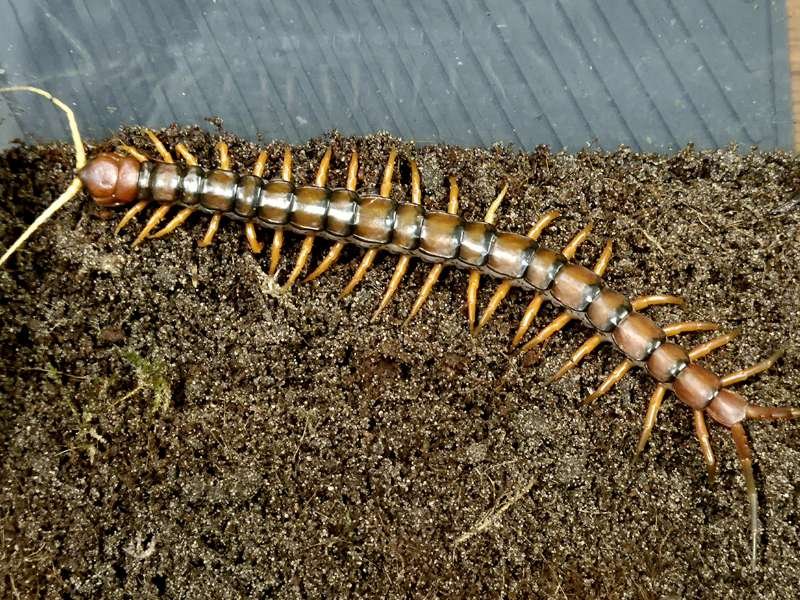
Scolopendra subspinipes ‘White Beard’
£80.00
Scientific Name: Scolopendra subspinipes
Common Name: White Beard Giant Centipede
Scolopendra subspinipes “White Beard” is a striking giant centipede with distinctive pale markings and a powerful build. Furthermore, its impressive size and bold behaviour make it a sought-after species among experienced keepers.
⚪ Distinctive White Markings | 🌏 Southeast Asian Giant Centipede | ⚡ Advanced Species
Description
Scientific Name: Scolopendra subspinipes
Common Name: White Beard Giant Centipede
Native Habitat
Scolopendra subspinipes ‘white beard’ occurs throughout tropical regions of Southeast Asia. It inhabits humid forests, woodland edges, plantations, and other warm environments.
During the day, it shelters beneath logs, bark, rocks, and deep leaf litter. However, it emerges after dark to hunt a wide variety of prey.
These habitats remain warm and humid throughout much of the year. Therefore, this species thrives when similar conditions are provided in captivity.
Care Information
Scolopendra subspinipes ‘White Beard’ is a striking colour form recognised for its pale antennae and facial markings. These lighter features create the distinctive appearance behind its common name.
Furthermore, this large tropical predator combines impressive size with a powerful build. As a result, it remains highly sought after within the centipede hobby.
This species actively patrols its enclosure and displays a strong feeding response. Consequently, it makes an exceptional display animal for experienced keepers.
Temperature: 20-24°C
Humidity: 70-85%
Diet: Crickets, roaches, locusts, mealworms, and suitably sized invertebrates
Difficulty: Advanced
Provide a secure enclosure with deep, moisture-retentive substrate. Additionally, include cork bark, leaf litter, and multiple hiding places.
Maintain a humidity gradient throughout the enclosure. Meanwhile, provide a slightly drier area alongside damp sections.
Always use a secure enclosure with a tight-fitting lid. This species climbs well and moves extremely quickly.
Breeding Information
Breeding requires mature animals and careful introduction of compatible pairs. Therefore, keepers should approach introductions with caution.
Females display strong maternal instincts once eggs are produced. Furthermore, they guard both eggs and hatchlings until dispersal.
When maintained correctly, juveniles grow steadily and develop into impressive adults. Consequently, breeding projects can prove both challenging and rewarding.
Wild-Caught Details
These specimens are wild caught. Therefore, each individual displays the impressive characteristics associated with this sought-after form.
Its distinctive pale markings, large size, and bold temperament create a commanding display animal. As a result, it remains a favourite among advanced centipede keepers.
Whether you are an experienced collector or dedicated enthusiast, this species offers exceptional appeal. Ultimately, few giant centipedes combine such striking appearance and behaviour.
⚪ Distinctive White Markings | 🌏 Southeast Asian Giant Centipede | ⚡ Advanced Species
Reviews
There are no reviews yet.