
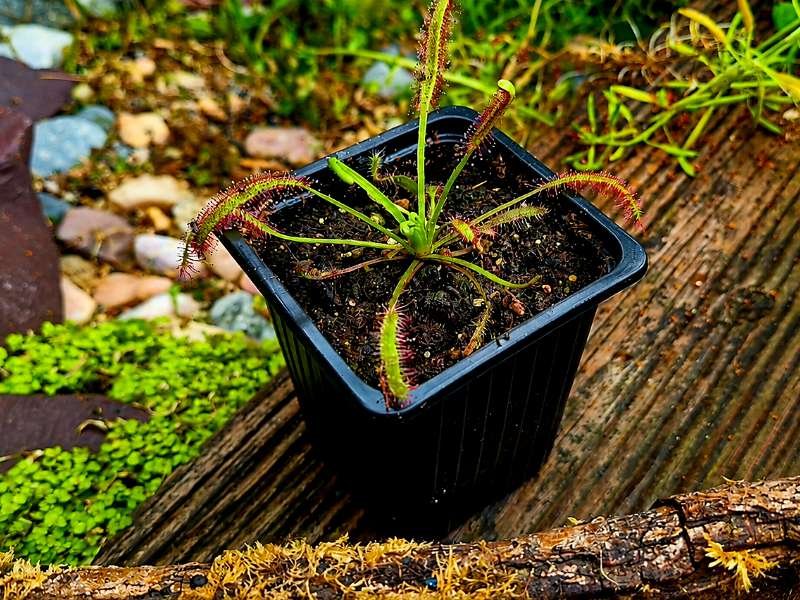
Drosera capensis ‘Cape Sundew’
£5.50
Scientific Name: Drosera capensis
Common Name: Cape Sundew
Drosera capensis is one of the most popular carnivorous plants in the world, renowned for its dew-covered leaves that trap and digest small insects. Additionally, its hardiness, rapid growth, and ease of care make it an excellent choice for both beginners and experienced carnivorous plant enthusiasts.
🪰 Carnivorous Insect-Trapping Plant | 🌿 Easy to Grow | 🌞 Ideal Beginner Sundew Species
Description
Scientific Name: Drosera capensis
Common Name: ‘Cape Sundew’
Great for fungus gnats!
Drosera capensis, commonly known as the Cape Sundew, is one of the most popular and rewarding carnivorous plants in cultivation. Native to South Africa, this remarkable species is famous for its long, slender leaves covered in glistening droplets of sticky mucilage that resemble morning dew. These sparkling droplets serve as highly effective insect traps, allowing the plant to capture and digest a wide range of small prey.
The Cape Sundew is widely regarded as one of the best carnivorous plants for both beginners and experienced growers. Not only is it attractive and fascinating to observe, but it is also exceptionally hardy and adaptable compared to many other carnivorous species. Furthermore, its vigorous growth, frequent flowering, and ease of propagation have made it a staple of carnivorous plant collections worldwide.
Watching a Cape Sundew capture prey is a fascinating process. Once an insect becomes trapped, the leaf gradually curls around it, increasing contact with digestive glands and allowing the plant to absorb valuable nutrients that are often scarce in its natural habitat.
Native Habitat
Drosera capensis originates from the Western Cape region of South Africa, where it grows in nutrient-poor wetlands, seepages, marshes, and permanently damp soils.
These environments are naturally low in nutrients, which has driven the evolution of its carnivorous lifestyle. By capturing insects, the plant supplements its nutritional requirements while continuing to thrive in conditions that would challenge many other plant species.
Care Information
Cape Sundews are among the easiest carnivorous plants to maintain. They thrive in consistently moist conditions with access to bright light and pure water.
Temperature: 10-30°C
Humidity: Moderate to high humidity, although highly adaptable
Lighting: Bright indirect light to full sun
Water: Rainwater, distilled water, or reverse osmosis water only
Difficulty: Easy
A nutrient-poor growing medium is essential. A mixture of sphagnum peat moss and perlite is commonly used and provides excellent results.
Regular watering is important, and plants should never be allowed to dry out completely. Consequently, many growers maintain their Cape Sundews using the tray method, allowing the pot to stand in a shallow reservoir of water.
Under strong lighting, plants often develop attractive red colouration while producing abundant sticky trapping droplets.
Cultivation Information
Drosera capensis flowers readily in cultivation and frequently produces viable seed. Mature plants send up tall flower stalks bearing delicate pink or pale purple flowers that open sequentially over an extended period.
This species is well known for its ability to self-pollinate. Consequently, seed production is often prolific even when only a single plant is present. Furthermore, seedlings grow quickly and can establish thriving colonies within a relatively short period.
In addition to seed production, Cape Sundews can also be propagated from leaf cuttings and root cuttings, making them one of the easiest carnivorous plants to reproduce in cultivation.
Cultivation Details
All plants are cultivated specimens. Cultivated Drosera capensis establish readily and reduce demand for wild-collected plants.
Its sparkling, dew-covered leaves create an eye-catching display. Furthermore, its insect-trapping behaviour fascinates growers of all experience levels. This species grows quickly and tolerates a wide range of conditions. Consequently, it remains one of the best carnivorous plants for beginners.
Experienced growers also value its beauty, reliability, and ease of propagation. Therefore, it remains a staple species in carnivorous plant collections worldwide.
Cultivated 🌿
Reviews
There are no reviews yet.