
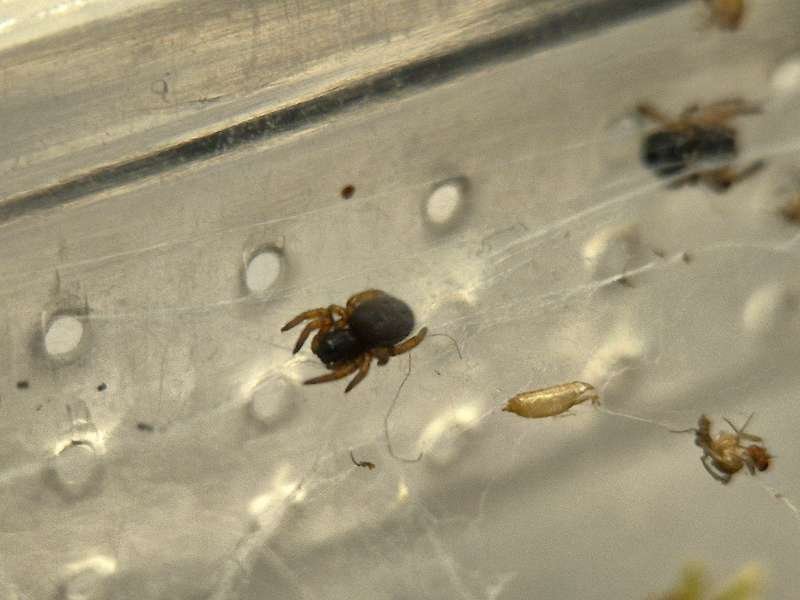
Gandanameno sp. ‘African Velvet Spider’
Price range: £9.00 through £37.00
Scientific Name: Gandanameno sp.
Common Name: African Velvet Spider
Gandanameno sp. is a captivating communal spider with a velvety appearance and intricate silk networks. Furthermore, its unusual social behaviour makes it a standout species for collectors and display enclosures.
🕷️ Captive Bred | 🕸️ Communal Species | 🌍 Unique African Spider
Description
Scientific Name: Gandanameno sp.
Common Name: African Velvet Spider
Native Habitat
Gandanameno sp. African Velvet Spiders occur throughout parts of southern Africa. They inhabit dry grasslands, scrubland, and rocky environments.
These spiders construct dense silk retreats beneath stones, within crevices, and among vegetation. Consequently, they remain protected from predators and harsh conditions.
Their natural habitats experience warm temperatures and relatively low humidity. Therefore, they adapt well to similarly maintained captive environments.
Care Information
Gandanameno sp. is a fascinating species known for its velvety appearance and unusual social behaviour. Unlike many spiders, individuals can often live communally.
Furthermore, they create intricate silk networks throughout their enclosure. As a result, colonies develop impressive tunnel systems and web structures.
Provide a well-ventilated enclosure with a dry substrate and suitable anchor points. Cork bark, branches, and rocks work particularly well.
Temperature: 22-28°C
Humidity: Low
Diet: Flies, bean weevils, crickets, and suitably sized invertebrates
Difficulty: Easy
These spiders spend much of their time within their silk retreats. However, they often emerge during feeding and colony expansion.
Their calm nature and striking appearance make them excellent display animals. Additionally, their communal tendencies provide behaviour rarely seen in other spiders.
Breeding Information
African Velvet Spiders display one of the most remarkable reproductive strategies among spiders. Females provide extensive parental care for developing offspring.
Mothers guard egg sacs and young spiderlings within the communal web structure. Furthermore, juveniles often remain together for a period before dispersing.
Consequently, breeding projects can become highly rewarding and fascinating to observe. Under stable conditions, colonies can establish and expand steadily.
Captive-Bred Details
All specimens are captive bred. Therefore, they adapt well to life in captivity and help reduce demand for wild-collected animals.
Their velvety appearance, communal lifestyle, and intricate web structures make them highly desirable. As a result, they remain one of the most unusual spiders available in the hobby.
Whether you are an experienced keeper or a dedicated collector, this species offers something unique. Ultimately, few spiders combine beauty, behaviour, and social living so effectively.
🕷️ Captive Bred | 🕸️ Communal Species | 🌍 Unique African Spider
Additional information
| Amount | 1Sling, 3Slings, 5Slings |
|---|
Reviews
There are no reviews yet.