
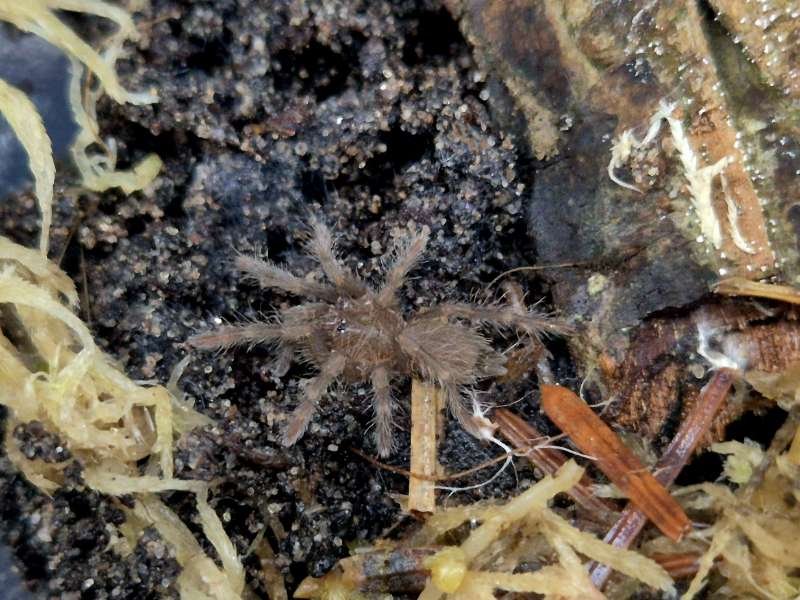
Hysterocrates gigas ‘Rusty Baboon Tarantula’
£6.00
Scientific Name: Hysterocrates gigas
Common Name: Rusty Baboon Tarantula
Hysterocrates gigas is a large Old World tarantula renowned for its powerful burrowing instincts and impressive adult size. These captive-bred 1.5 cm DLS slings are a rewarding long-term project for experienced keepers, spending much of their time creating intricate underground tunnel systems that closely mirror their natural behaviour.
🕷️ Captive Bred │ 📏 Approx. 1.5 cm DLS │ 🌍 West & Central African Species │ 🏡 Fossorial Burrower │ ⭐ Experienced Keepers
Description
Scientific Name: Hysterocrates gigas
Common Name: Rusty Baboon Tarantula
Some tarantulas cover their homes with sheets of silk. Others vanish beneath the soil. Hysterocrates gigas belongs firmly in the second group. This impressive Old World species spends most of its life inside deep burrows, where it waits patiently for passing prey. Enthusiasts value it for its powerful build, fascinating behaviour and enormous adult size.
Raising a tiny sling into a fully grown adult is one of the most rewarding parts of keeping this species. Given plenty of deep substrate, it quickly begins digging and creates an intricate network of tunnels. Watching it engineer its own underground world is often just as enjoyable as seeing the spider itself.
Native Habitat
Hysterocrates gigas occurs throughout the humid tropical forests of Cameroon, Nigeria, Equatorial Guinea and neighbouring parts of Central and West Africa. Warm temperatures and high humidity create ideal conditions for this large fossorial tarantula.
Instead of climbing, this species spends almost its entire life underground. It digs deep burrows beneath logs, rocks and dense leaf litter. These tunnels protect the spider from predators while maintaining stable temperatures and humidity.
The entrance usually remains well hidden. The spider waits just inside and ambushes insects and other small animals that wander too close.
Even in captivity, Hysterocrates gigas continues to excavate. It constantly shifts substrate, reinforces tunnel walls and expands its burrow as it grows. Providing plenty of substrate depth allows these natural behaviours to develop fully.
Care Information
Enclosure
House slings in a secure enclosure with a generous depth of substrate. Unlike many terrestrial tarantulas, Hysterocrates gigas spends very little time on the surface.
Substrate
Use a mix of coco fibre, organic topsoil and clay-based substrate. This combination holds moisture well and supports stable burrows.
Temperature & Humidity
Maintain temperatures between 21°C and 26°C. Keep the lower layers of substrate slightly moist while allowing the surface to dry a little between watering. Good ventilation helps prevent stagnant air without drying the enclosure.
Feeding
Offer appropriately sized prey, including micro crickets or small roach nymphs. Healthy slings feed eagerly and usually grow at a steady pace under suitable conditions.
Temperament
Like most Old World tarantulas, Hysterocrates gigas relies on speed and defensive behaviour instead of urticating hairs. Its venom is medically significant, so this species suits experienced keepers only.
Handling
Do not handle this tarantula. It moves quickly when disturbed, and handling increases the risk of injury to both the spider and the keeper.
Breeding Information
Females construct an egg sac deep inside the safety of their burrow after a successful mating. They guard the sac until the spiderlings develop.
Healthy females can produce well over one hundred spiderlings under suitable conditions. The young remain inside the burrow during their earliest life stages before dispersing naturally.
Males mature much sooner than females and live for a considerably shorter time. Females often live well over ten years when provided with correct care.
Captive-Bred Details
All of our Hysterocrates gigas are captive bred. Captive breeding helps reduce demand for wild-caught specimens while producing healthy, well-established spiderlings.
Each sling measures approximately 1.5 cm diagonal leg span (DLS) at the time of sale. Every individual feeds well before dispatch, and we package each spider carefully for safe transport.
As with all living animals, slight differences in size and colour are completely natural. With proper care, these small slings develop into impressive adults that display the remarkable burrowing behaviour for which the species is famous.
Whether you want to expand an Old World collection or raise one of Africa’s largest fossorial tarantulas from a sling, Hysterocrates gigas offers years of fascinating behaviour and rewarding observation.
🕷️ Captive Bred │ 📏 Approx. 1.5 cm DLS Sling │ 🌍 West & Central African Species │ 🏡 Fossorial Burrower │ ⭐ Best Suited to Experienced Keepers
Reviews
There are no reviews yet.