
Calcium Stone
Price range: £3.99 through £20.99
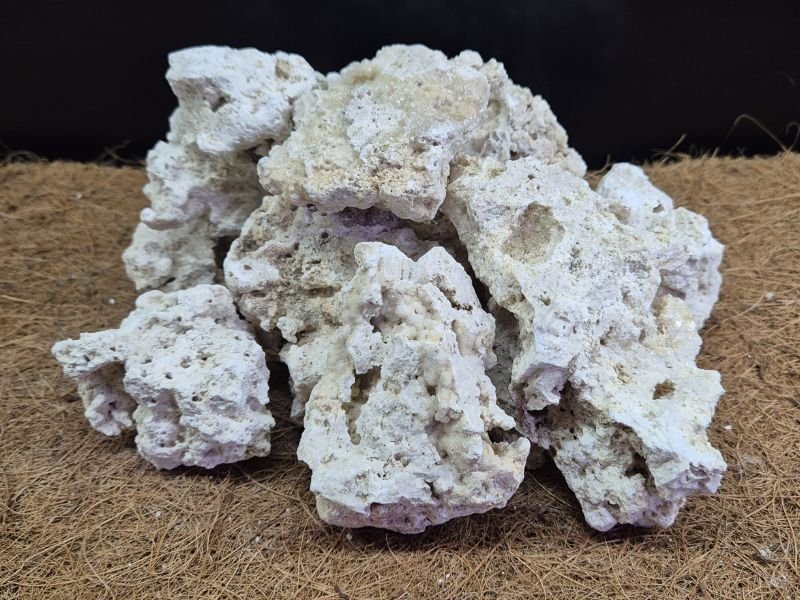
Calcium Stone is a natural, calcium-rich fossil reef rock for isopods, millipedes, bioactive enclosures and aquariums. Lab verified at 85–95% calcium, it is highly porous, mineral-rich and may feature natural crystal patches, fossils and ancient reef textures.
Ideal for limestone-inspired setups, grazing surfaces and adding natural structure to enclosures.
Features: Hand selected • RODI washed • Steam sterilised • Heat cured • Lab verified • Aquarium safe
Description
Calcium Stone – Natural Calcium Rock for Isopods, Millipedes & Bioactive Enclosures
Lab report avaliable upon request.
Our Calcium Stone is a natural, calcium-rich rock made from ancient fossil reef material. It closely resembles the calcium-carbonate rock found across habitats in Southeast Asia. It is highly porous, mineral-rich and full of natural character, making it both functional and decorative.
We tested it in our own setups for around a month before adding it to the range. The response from the animals has been excellent. Our isopods regularly gather on it, while several of our millipede species seem even more interested. Smaller flat-backed millipedes, including Pink Dragons, are often sitting directly on the stone whenever we check the enclosure.
Naturally High in Calcium
Laboratory testing shows the stone contains approximately 85–95% calcium, it also contains other naturally occurring minerals.
This calcium-rich composition makes it particularly useful for keepers wanting to add a natural mineral source to an enclosure. It is also well suited to limestone and karst-inspired setups, especially for species from calcium-rich regions.
Across Southeast Asia, many tropical invertebrates live around limestone caves, karst formations, rocky outcrops and calcium-rich forest soils. Calcium Stone helps bring some of that rocky structure into a captive setup. It works particularly well alongside suitable substrate, leaf litter, rotten wood and other natural materials.
Natural Aragonite Crystals
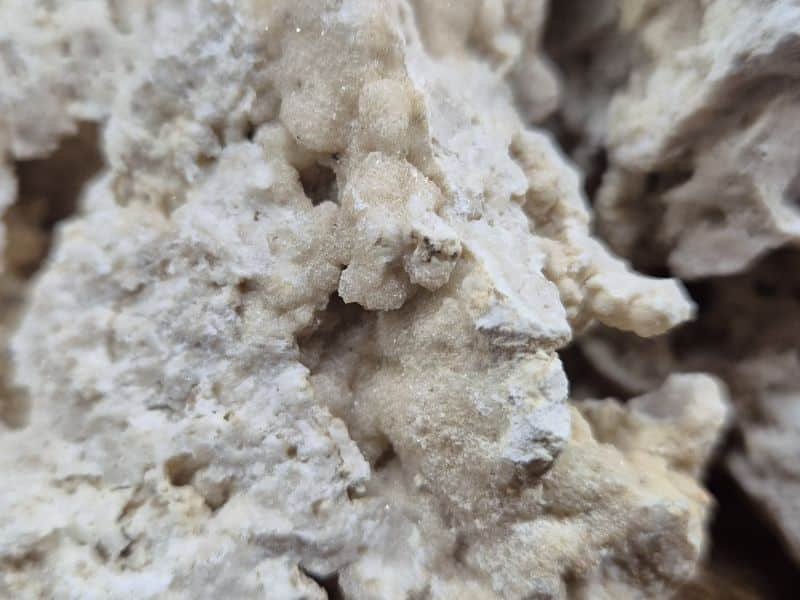
One of the nicest features is the occasional patch of exposed aragonite crystal across the surface. These crystals catch the light and give certain pieces a subtle sparkle, especially under enclosure lighting.
The photographs really do not do it justice. Some pieces genuinely look as though they have been picked straight from a glistening cave wall in Asia.
Because the stone is completely natural, the amount of visible crystal will vary from piece to piece.
Fossils and Ancient Reef Structure
The material originates from fossil reef deposits dating back roughly 120,000 years. As a result, some pieces still show clear signs of their ancient marine origin.
You may find small shell fragments, coral-like textures, fossil structures, natural channels or unusual cavities running through the rock. Some pieces are fairly simple, while others can be incredibly detailed.
That variation is part of what makes the material so interesting. No two pieces are identical, and occasionally you will find one with obvious crystal growth or a small fossil sitting right on the surface.
Highly Porous Structure
Calcium Stone has a naturally porous structure filled with cracks, pits, holes and interconnected cavities. Laboratory analysis also found microscopic pores throughout the material, giving it a very large surface area.
In a terrestrial enclosure, that rough structure creates plenty of places for springtails, small isopods and other microfauna to explore. Biofilm can also develop across the surface over time. Meanwhile, the smaller cracks and cavities help the stone blend naturally into a functioning bioactive setup.
It looks particularly good when partially buried into the substrate and surrounded with leaf litter, moss, bark or rotten wood.
Ideal for Bioactive and Naturalistic Setups
We have mainly tested Calcium Stone with isopods and millipedes, but it also works well in springtail cultures and bioactive terrariums. It is particularly useful for species that naturally occur in limestone-rich regions.
The stone can act as a mineral source, climbing surface, microfauna habitat or simply part of the enclosure structure. It is especially useful in limestone-inspired or Southeast Asian-style setups, where ordinary decorative stone often does not match the habitat.
Carefully Prepared Before Sale
Each batch is hand selected at source, RODI washed, steam sterilised, heat cured and lab verified. 🙌
Laboratory testing also found extremely low levels of undesirable heavy metals, including lead, cadmium, arsenic and mercury. That gives us far more information about the material than we would normally get with naturally sourced rock.
Suitable for Aquarium Use
This stone is also clean enough for use in aquariums and reef systems. Its porous structure provides a large surface area for bacterial colonisation, while the calcium-carbonate composition can also contribute to natural buffering.
As with any calcium-rich rock, it may affect water chemistry, particularly in soft or acidic water. Aquarium keepers should therefore consider the needs of the species being kept before adding it.
For terrestrial invertebrate setups, the stone can simply be placed directly into the enclosure once received.
Every Piece Is Different
Because this is a natural material, size, colour, shape, porosity and surface texture will vary. Some pieces may contain obvious cavities, while others may have more exposed crystal, fossil structures or smoother areas.
That variation is exactly what we wanted from it. Rather than another moulded decoration or generic piece of rock, you are adding a genuine piece of ancient fossil reef to the enclosure, complete with natural calcium, minerals, texture and the occasional bit of geological treasure hiding on the surface.
And judging by our own millipedes, apparently it also makes an excellent place to graze.
Additional information
| Amount | 250g, 500g, 1kg, 2kg |
|---|
Reviews
There are no reviews yet.