
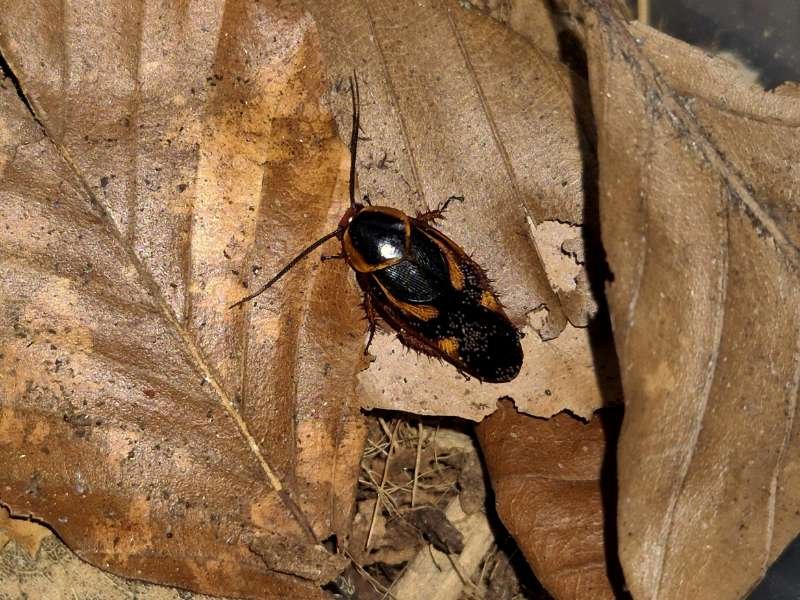
Eustegasta poecilia
Price range: £70.00 through £130.00
Scientific Name: Eustegasta poecilia
Common Name: None Established
Eustegasta poecilia is a striking African cockroach species prized for its glossy black colouration and vivid orange markings. Additionally, its active behaviour and uncommon status make it a highly desirable species for display enclosures and specialist cockroach collections.
🧡 Bold Orange Markings | 🌍 African Cockroach Species | 🌿 Excellent Display Roach Collection Species
Description
Scientific Name: Eustegasta poecilia
Common Name: None Established
Eustegasta poecilia is a remarkably attractive cockroach species prized for its glossy black colouration and vivid orange markings. Native to Africa, this species stands out immediately among ornamental cockroaches thanks to its striking contrast and elegant appearance. Adults display bold orange patterning across the pronotum and wings, creating a look that is often compared to warning-coloured beetles or true bugs.
Unlike many larger display roaches, Eustegasta poecilia remains relatively compact while still offering exceptional visual appeal. Consequently, it has become increasingly sought after by collectors looking for unusual and rarely available species. Furthermore, its active behaviour and tendency to spend time exploring bark surfaces make it an enjoyable species to observe within a naturalistic enclosure.
Native Habitat
Eustegasta poecilia originates from tropical regions of south-eastern Africa, including Malawi and neighbouring areas. In the wild, it inhabits dry forests and woodland environments where it lives among leaf litter, decaying wood, bark, and other organic debris.
These habitats provide shelter, stable humidity, and abundant food sources throughout the year. As a result, this species thrives in enclosures that replicate these warm and humid conditions.
Care Information
This species thrives in a well-ventilated enclosure containing leaf litter, cork bark, rotten wood, and a moisture-retentive substrate. Multiple hides should be provided, as individuals frequently shelter beneath bark and within crevices.
Temperature: 24-29°C
Humidity: Moderate humidity with lots of ventilation
Diet: Leaf litter, decaying plant material, fruits, vegetables, fish flakes, pollen, and other protein-rich foods
Difficulty: Easy to Moderate
A moisture gradient is beneficial and allows the colony to regulate its preferred conditions naturally. Additionally, regular access to leaf litter and decaying organic matter helps encourage natural feeding behaviours.
Although this species appreciates humidity, adequate airflow remains important. Therefore, a balance between moisture retention and ventilation generally produces the best long-term results.
Breeding Information
Eustegasta poecilia can breed successfully in captivity when maintained under stable environmental conditions. Females produce oothecae which develop under warm and humid conditions before hatching into small nymphs.
The nymphs display lighter colouration than the adults and gradually develop their striking markings through successive moults. Furthermore, established colonies often grow steadily when provided with quality nutrition and suitable environmental conditions.
Patience is important, as growth rates may vary depending on temperature, feeding, and enclosure conditions.
Captive-Bred Details
All specimens are captive bred. Captive-bred Eustegasta poecilia adapt well to established enclosures and support sustainable invertebrate keeping.
With its glossy black body, vivid orange markings, and uncommon status within the hobby, Eustegasta poecilia stands out as one of the most visually impressive African cockroach species available. Whether maintained as a display colony or incorporated into a specialist collection, this beautiful species offers a unique combination of colour, behaviour, and rarity that continues to attract enthusiasts worldwide.
For a more in depth care guide click here
Captive Bred
Additional information
| Amount | 10 Nymphs, 20 Nymphs |
|---|
Reviews
There are no reviews yet.