
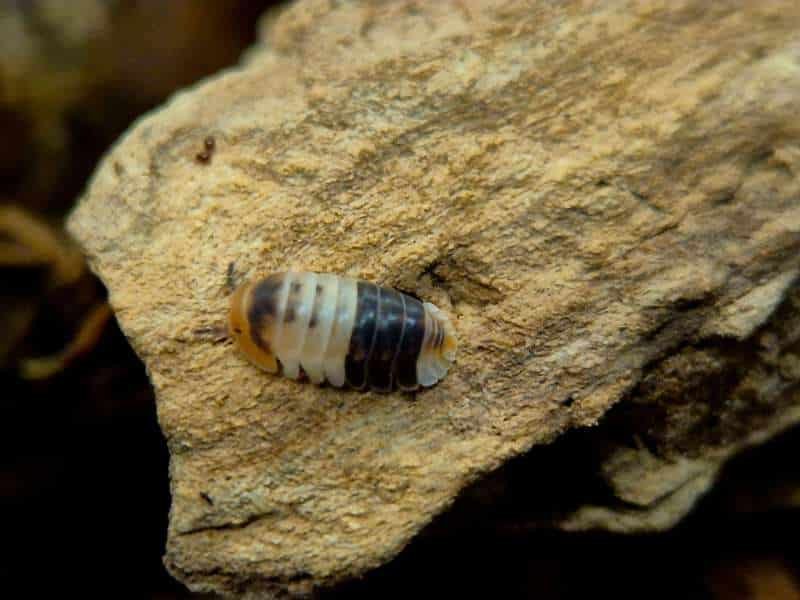
Cubaris ‘White Shark’
Price range: £12.00 through £50.00
Scientific Name: Cubaris ‘White Shark’
Common Name: White Shark
Cubaris ‘White Shark’ is a striking tropical isopod with bold tri-colour markings and exceptional display value. Additionally, its distinctive appearance makes it highly sought after by collectors.
🦈 Striking Tri-Colour Pattern | 💎 Premium Collector Species | ♻️ Captive Bred
Description
Scientific Name: Cubaris ‘White Shark’
Common Name: White Shark
Native Habitat
Cubaris ‘White Shark’ originates from humid limestone-rich habitats in Southeast Asia. It inhabits leaf litter, decaying wood, and sheltered microhabitats.
These environments provide stable humidity and abundant organic matter. Consequently, this species thrives amongst decomposing woodland materials.
Furthermore, limestone-rich habitats provide valuable calcium sources. Therefore, access to calcium remains important in captivity.
Care Information
Cubaris ‘White Shark’ is a highly sought-after tropical isopod admired for its striking tri-colour pattern. Its bold markings create exceptional contrast against natural substrates.
Furthermore, its compact size and premium appearance make it highly desirable. As a result, it remains a favourite among specialist collectors.
This species performs best in established enclosures with stable conditions. Consequently, it rewards keepers with outstanding display value.
Temperature: 22-27°C
Humidity: High humidity with good airflow
Diet: Leaf litter, rotten wood, vegetables, fish flakes, bee pollen, and protein-rich foods
Difficulty: Moderate
Provide a substrate rich in decayed hardwood, rotten wood, and leaf litter. Additionally, include cork bark and sphagnum moss for shelter.
Maintain a moisture gradient throughout the enclosure. Meanwhile, provide plenty of humid retreats and hiding places.
Always offer calcium-rich materials such as limestone, cuttlebone, or crushed oyster shell. Therefore, healthy moulting and shell development remain supported.
Breeding Information
White Shark Isopods grow and reproduce more slowly than many common species. Therefore, patience and stable conditions remain important.
Consistent warmth, humidity, and nutrition encourage healthy colony development. Furthermore, established colonies breed steadily over time.
Juveniles develop gradually when suitable conditions remain available. As a result, long-term projects can prove highly rewarding.
Captive-Bred Details
All specimens are captive bred. Therefore, they adapt exceptionally well to established enclosures.
Their distinctive colouration and premium status create outstanding collector appeal. As a result, they remain one of the most desirable Cubaris morphs available.
Whether you maintain display cultures or breeding colonies, this species performs exceptionally well. Ultimately, few isopods combine such striking markings and collector value.
🦈 Striking Tri-Colour Pattern | 💎 Premium Collector Species | ♻️ Captive Bred
Additional information
| Amount | 10 Mixed sizes, 20 mixed sizes, 50 Mixed sizes |
|---|
Reviews
There are no reviews yet.