
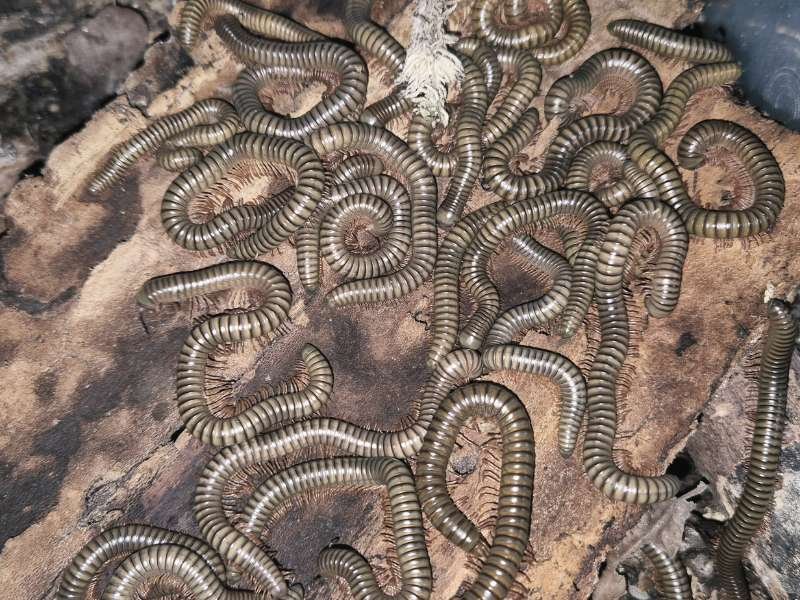
Analocostreptus gregorius ‘African Olive Millipede’
£7.00
Scientific Name: Analocostreptus gregorius
Common Name: African Olive Millipede
Analocostreptus gregorius is a peaceful giant millipede prized for its attractive olive-brown colouration, gentle temperament and constant foraging behaviour. This captive-bred species thrives in tropical bioactive enclosures, making it an excellent choice for both beginner and experienced keepers looking for a fascinating and easy-to-care-for detritivore.
🐛 Captive Bred │ 🌍 East African Species │ 🍂 Natural Detritivore │ 🌿 Ideal for Bioactive Setups │ ⭐ Beginner Friendly
Description
Scientific Name: Analocostreptus gregorius
Common Name: African Olive Millipede
Graceful, peaceful and endlessly fascinating, Analocostreptus gregorius is a beautiful giant millipede that makes an excellent display species for tropical bioactive enclosures. Its smooth olive-brown body, gentle temperament and constant foraging behaviour make it a favourite among both beginner and experienced invertebrate keepers.
The African Olive Millipede spends its days slowly exploring the forest floor in search of decaying leaves, rotting wood and other organic matter. Watching these gentle detritivores recycle nutrients while carefully navigating their environment is both relaxing and rewarding. Given the correct conditions, Analocostreptus gregorius quickly settles into captivity and becomes an active member of any tropical setup.
Native Habitat
Analocostreptus gregorius is native to the tropical forests of East Africa, where it inhabits warm, humid environments rich in decaying organic material.
It spends most of its life beneath leaf litter, among fallen branches and inside rotting logs. These habitats provide stable humidity, protection from predators and an endless supply of decomposing plant material on which it feeds.
As an important decomposer, this species plays a vital ecological role. By breaking down dead vegetation, it returns valuable nutrients to the soil and helps maintain healthy forest ecosystems.
Care Information
Enclosure
Provide a secure enclosure with plenty of floor space and good ventilation. Height is less important than providing a deep substrate and numerous hiding places.
Substrate
A deep substrate is essential and should measure at least 15 cm for adults. A quality mix of organic topsoil, rotten hardwood, flake soil, decaying leaf litter and white rotten wood provides both shelter and an important food source.
Avoid fertilised composts or substrates containing pesticides or chemical additives.
Temperature & Humidity
Maintain temperatures between 22°C and 26°C.
Humidity should remain between 75% and 80%, although the enclosure should never become waterlogged. Keeping one area slightly drier allows the millipedes to regulate their preferred moisture levels naturally.
Feeding
Although much of their diet comes from the substrate itself, supplementary foods should be offered regularly. Suitable foods include cucumber, courgette, sweet potato, carrot, mushrooms, melon, other fresh vegetables and protein.
Always ensure decaying hardwood and leaf litter remain available, as these form the foundation of a healthy diet. A source of calcium, such as crushed cuttlebone or oyster shell, also supports healthy exoskeleton development.
Temperament
Analocostreptus gregorius is an exceptionally calm and slow-moving species. It rarely shows defensive behaviour and instead curls into a tight spiral if disturbed.
This peaceful nature makes it an excellent choice for keepers looking to observe natural behaviour rather than defensive displays.
Handling
Handling should remain occasional and always be gentle. Support the millipede fully with both hands and avoid pulling or lifting it by the body. Frequent handling can cause unnecessary stress, so observation is generally the best approach.
Breeding Information
Analocostreptus gregorius breeds readily when maintained under suitable conditions.
Females deposit their eggs safely beneath the substrate, where the young develop out of sight. Tiny juveniles spend much of their early life feeding on decomposing organic material before gradually emerging as they mature.
Maintaining consistently warm temperatures, deep nutritious substrate and high humidity encourages successful breeding. Well-established colonies often reproduce naturally with minimal intervention.
Captive-Bred Details
All of our Analocostreptus gregorius are captive bred, helping to reduce demand for wild-collected animals while producing healthy, well-established specimens.
Every millipede receives a varied diet before dispatch and is packed carefully using specialist live invertebrate packaging to ensure it arrives safely.
As living animals, slight differences in size and colour are completely natural. Healthy specimens display smooth olive-brown colouration, active foraging behaviour and a strong appetite once settled into their new enclosure.
Whether you’re starting your first tropical millipede enclosure or expanding an established collection, Analocostreptus gregorius is a beautiful, easy-to-maintain species that rewards keepers with years of peaceful and fascinating behaviour.
🐛 Captive Bred │ 🌍 East African Species │ 🍂 Excellent Natural Detritivore │ 🌿 Ideal for Tropical Bioactive Enclosures │ ⭐ Suitable for Beginners & Experienced Keepers
Reviews
There are no reviews yet.