
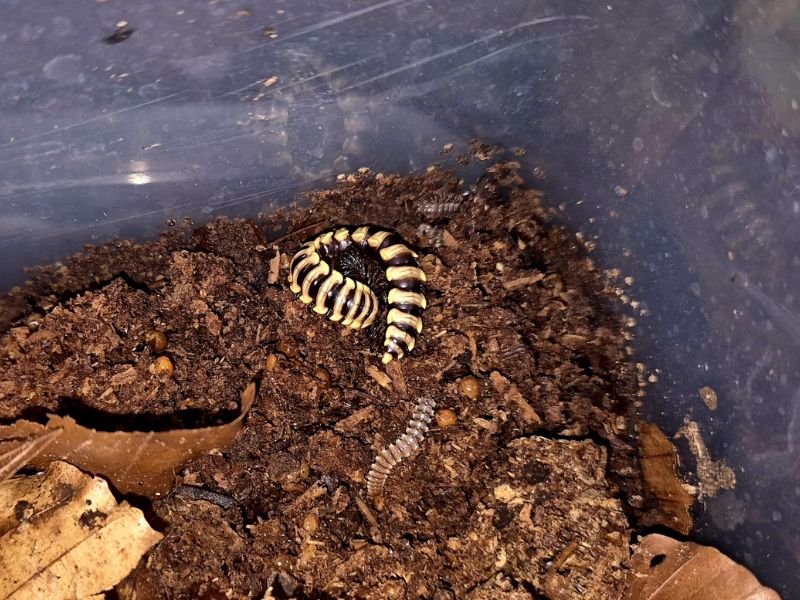
Polydesmus sp. ‘Bumblebee’
£10.00
Scientific Name: Polydesmus sp.
Hobby Name: Bumblebee
Polydesmus sp Bumblebee is a striking flat-backed millipede with bold yellow and dark colouration. This active detritivore thrives in humid, naturalistic setups with deep substrate, leaf litter and plenty of decomposing hardwood.
Captive-bred • Flat-backed millipede • Bold yellow markings • Detritivore • Naturalistic enclosure species
Description
Scientific Name: Polydesmus sp. ‘Bumblebee’
Common Name: flat backed Bumblebee Millipede
Offered as captive bred adults\sub-adults.
Polydesmus sp Bumblebee is a striking flat-backed millipede with bold yellow and dark colouration across its segmented body. Its flattened shape, contrasting markings and active forest-floor behaviour make it a distinctive species for naturalistic millipede collections.
These millipedes spend much of their time beneath leaf litter, rotten hardwood and within the upper layers of the substrate. Once established, they regularly emerge to explore and feed, particularly when humidity remains high.
Native Habitat
The exact wild locality of the hobby culture remains uncertain. However, Polydesmus sp Bumblebee thrives in warm, humid environments with plenty of decomposing plant material.
Similar flat-backed millipedes inhabit forest floors rich in leaf litter, decaying wood and moist organic soil. Their flattened bodies allow them to move through narrow spaces beneath bark and inside rotten hardwood.
A naturalistic enclosure containing deep substrate and plenty of decomposing material therefore suits them particularly well.
Polydesmus sp Bumblebee Care Information
Temperature: Around 20–26°C
Humidity: Moderate to high
Diet: Detritivore
Difficulty: Easy to moderate
Lifestyle: Ground-dwelling and burrowing
A ventilated plastic tub or terrarium works well for Polydesmus sp Bumblebee. Floor space and substrate quality matter more than excessive height because these millipedes spend most of their time close to ground level.
Provide a deep layer of nutritious substrate with plenty of rotten hardwood and leaf litter. This gives the millipedes somewhere to burrow while also supplying much of their natural diet.
Substrate
The substrate should contain plenty of decomposing organic material because these millipedes feed as they move through it. A mixture of organic topsoil, leaf mould and heavily decomposed hardwood creates an excellent base.
Aim for around 8–10 cm of substrate where possible. Cover the surface with a generous layer of hardwood leaf litter and partially bury soft pieces of rotten hardwood throughout the enclosure.
Avoid using plain coco coir as the main substrate. It holds moisture effectively but provides very little nutrition compared with decomposed leaves, leaf mould and rotten wood.
Moisture and Humidity
Keep most of the substrate consistently moist without making it waterlogged. A slightly drier area creates a useful moisture gradient and allows the millipedes to choose the conditions they prefer.
Moss can help maintain humid areas while providing additional shelter. Good ventilation also remains important because warm, stagnant conditions can encourage excessive mould and other unwanted problems.
Never allow the entire substrate to dry completely.
Feeding Polydesmus sp Bumblebee
Rotten hardwood and decomposing hardwood leaves should form the foundation of the diet. Keep both available at all times and replace them gradually as the colony breaks them down.
You can supplement this natural diet with small pieces of mushroom, courgette, squash, sweet potato and similar foods. Small amounts of suitable protein-rich food can also provide additional nutrition, although this should remain supplementary.
Remove fresh foods before they spoil heavily. A healthy enclosure should always contain plenty of natural food within the substrate itself.
Calcium
Keep a calcium source available within the enclosure. Crushed oyster shell, cuttlefish bone or another suitable calcium-rich material can provide additional minerals.
A nutritious substrate remains more important than supplementary feeding alone. Leaf litter, rotten hardwood and decomposing organic material should always remain available.
Behaviour
Polydesmus sp Bumblebee spends much of its time beneath bark, leaves and decaying wood. Established animals often become more visible after misting or when fresh food enters the enclosure.
Their flattened body allows them to move easily between layers of decomposing material. The bold yellow and dark colouration also makes them particularly easy to spot when they emerge onto the surface.
These millipedes may remain still or curl slightly when disturbed. They work best as a display species rather than an animal for frequent handling.
Breeding Information
Polydesmus sp Bumblebee can breed successfully in captivity when given stable moisture, nutritious substrate and plenty of decomposing material. Females lay their eggs within the substrate, where the young develop among leaf mould and rotten hardwood.
Juveniles start extremely small and may remain hidden for some time. Adults and young can live together, so you do not normally need to separate different generations.
Encouraging Strong Colonies
Stable moisture, deep substrate and constant access to rotten hardwood help encourage successful breeding. Avoid repeatedly digging through the enclosure because juveniles and moulting animals may remain hidden beneath the surface.
Refresh the setup gradually instead of replacing everything at once. Adding new leaf litter and decomposed hardwood keeps the food supply available while preserving established areas of substrate.
Once numbers increase, you can divide part of the colony into another enclosure to create a useful backup culture.
Colony Maintenance
A mature enclosure should contain plenty of decomposing organic material. Leaf litter will gradually disappear, while soft rotten hardwood becomes increasingly broken down as the millipedes feed.
Avoid frequent complete substrate changes because eggs and juveniles may remain hidden inside it. Instead, replace small sections when necessary and regularly top up the leaf litter and rotten wood.
Springtails also make useful companions within the enclosure. They help process fine organic waste and fungal growth without heavily competing with the millipedes.
Handling
Handle these millipedes only when necessary. Like many flat-backed millipedes, they can produce defensive secretions when stressed.
Allowing an animal to walk onto bark usually causes less disturbance than picking it up directly. Always wash your hands after handling millipedes or enclosure materials, and avoid contact with the eyes or mouth.
Captive-Bred Details
Our Polydesmus sp Bumblebee come from captive-bred colonies. Maintaining strong captive populations helps keep unusual millipedes established within the hobby while reducing unnecessary reliance on wild collection.
Their bold colouration, flattened body and natural forest-floor behaviour make them a fascinating species to maintain. Provide deep nutritious substrate, consistent moisture, plenty of rotten hardwood and a permanent supply of leaf litter for the best results.
🪱 Captive-Bred by NaturesZion 🌿
Reviews
There are no reviews yet.