
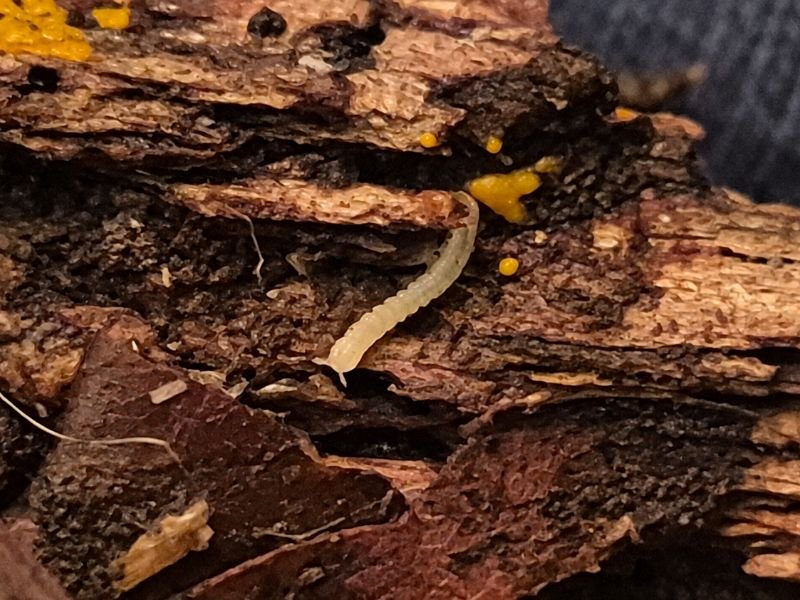
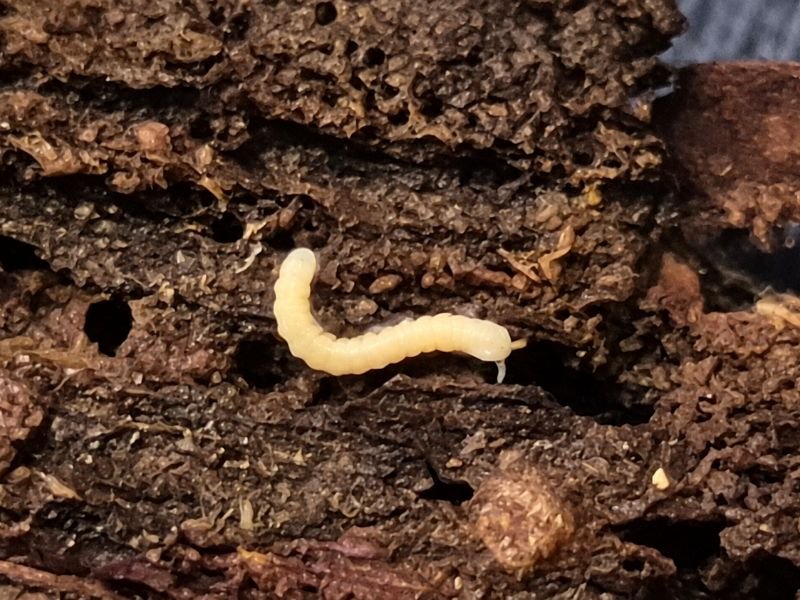
Polydesmus sp. ‘Tiny’
Price range: £16.00 through £28.00
Scientific Name: Polydesmus sp. Tiny
Common Name: Tiny Flat-Backed Millipede
Polydesmus sp. ‘Tiny’ is a miniature flat-backed millipede with a pale cream body and a secretive forest-floor lifestyle. They thrive in moist, organic setups with plenty of leaf litter and rotten hardwood, making them ideal for naturalistic colonies and suitable bioactive enclosures.
Captive-bred • Miniature species • Flat-backed millipede • Detritivore • Bioactive suitable
Description
Scientific Name: Polydesmus sp. Tiny
Common Name: Tiny Flat-Backed Millipede
Polydesmus sp. ‘Tiny’ is a charming miniature flat-backed millipede with a pale cream to off-white body and the characteristic flattened shape seen across the Polydesmida. Their small size makes them very different from the large tropical millipedes normally seen in the hobby, while their active burrowing and grazing behaviour makes them fascinating to watch in a naturalistic setup.
These millipedes spend much of their time moving through decomposing wood, leaf litter and moist substrate. They are particularly well suited to keepers who enjoy smaller detritivores, microfauna cultures and naturalistic forest-floor enclosures.
They make an incredible clean up crew when paired with springtails.
Native Habitat
The exact wild locality of the hobby culture sold as Polydesmus sp. ‘Tiny’ is not currently confirmed. Like other small flat-backed millipedes, they are associated with damp terrestrial habitats rich in decomposing plant material.
In nature, millipedes of this type typically shelter beneath leaf litter, bark and decaying wood where humidity remains stable. A captive enclosure should therefore focus on deep organic substrate, rotten hardwood and plenty of leaf litter rather than open space.
Care Information
Adult Size: Small / miniature species
Temperature: Around 18–24°C
Humidity: Moderate to high
Diet: Detritivore
Difficulty: Easy to moderate
Lifestyle: Ground-dwelling and burrowing
A ventilated plastic tub or small terrarium works well for Polydesmus sp. ‘Tiny’. Floor space and substrate quality matter more than height because these millipedes spend most of their time within the lower layers of the enclosure.
Their small size means even a modest enclosure can support a healthy colony. However, avoid overcrowding and provide plenty of decomposing material for them to feed on.
Substrate
A nutritious substrate is essential because the substrate itself forms a large part of their diet. Use a mixture containing organic soil, decomposed hardwood, leaf mould and other well-rotted plant material.
Provide several centimetres of substrate so the millipedes can burrow naturally. A thick layer of hardwood leaf litter should cover the surface, while pieces of soft rotten wood can be partially buried throughout the enclosure.
Plain coco coir should not form the main substrate because it offers very little nutritional value. If used, mix it with plenty of rotten hardwood, leaf mould and other organic material.
Moisture and Ventilation
Keep the substrate consistently moist without making it waterlogged. Small millipedes can dry out quickly, so a reliable damp zone should always remain available.
Good airflow still matters, especially in a warm enclosure. Aim for a humid forest-floor environment rather than a sealed, stagnant container.
Adding moss to one side of the enclosure can help maintain a stable moisture gradient. The millipedes can then move between wetter and slightly drier areas as needed.
Feeding
Decomposing hardwood and hardwood leaf litter should form the foundation of the diet. Oak, beech and other safe hardwood leaves work particularly well once they have begun to soften and break down.
Supplementary foods can include small amounts of vegetables, mushroom, squash and similar soft plant material. Tiny amounts of fish food or other protein-rich foods can also provide additional nutrition, although these should remain occasional supplements.
Remove fresh foods before they spoil excessively. Because this species is small, a surprisingly tiny piece of food can feed a large number of individuals.
Calcium
Keep a calcium source available within the enclosure.
Crushed oyster shell, cuttlefish bone or another suitable calcium-rich material works well. Millipedes use calcium while building and maintaining their exoskeleton.
A varied substrate containing rotten wood, leaf litter and additional calcium gives the colony a much stronger nutritional base than supplementary feeding alone.
Behaviour
Polydesmus sp. ‘Tiny’ spends much of its time moving through the substrate and beneath pieces of decomposing wood. However, established colonies regularly appear on the surface, especially around food and moist areas.
Their flattened body allows them to squeeze into very narrow spaces within rotting wood and leaf litter. This makes a naturalistic enclosure particularly rewarding because the animals use almost every layer of the habitat.
Despite their size, they can become surprisingly active when conditions suit them. A healthy colony often reveals far more animals than expected once a piece of bark or rotten wood is lifted.
Breeding Information
Polydesmus sp. ‘Tiny’ can breed readily when kept in a mature, moisture-stable enclosure with plenty of decomposing organic material.
Females lay eggs within the substrate, where the young hatch and begin feeding on fine organic material. Juveniles are extremely small and may remain unnoticed for some time after hatching.
Different generations can remain together in the same enclosure. There is no need to separate young from adults under normal colony conditions.
Encouraging Strong Colonies
Avoid frequently replacing the entire substrate. Eggs, juveniles and very small individuals can easily be removed without noticing them.
Instead, refresh the enclosure gradually by adding new rotten hardwood, leaf litter and fresh substrate material as the existing food source breaks down. This keeps the colony stable while preserving the microorganisms that help process organic matter.
Once numbers increase, you can divide part of the colony into a second enclosure. Maintaining a backup culture also protects the species if the main colony ever develops a problem.
Bioactive and Clean-Up Crew Use
Polydesmus sp. ‘Tiny’ can contribute to suitable bioactive enclosures by consuming decomposing leaf litter, rotten wood and other organic material.
Their small size allows them to work through fine spaces within the substrate where larger millipedes cannot easily reach. They can therefore add another useful decomposer to humid forest-floor setups.
However, they should not replace springtails or isopods completely. A mixed clean-up crew works best because each group uses different parts of the enclosure and processes different materials.
They work particularly well in setups that already contain deep organic substrate, leaf litter and rotten hardwood.
Handling
These millipedes are best observed rather than regularly handled.
Like many flat-backed millipedes, they may produce defensive secretions when stressed. Always wash your hands after handling millipedes or enclosure materials and avoid contact with the eyes or mouth.
Their small size also makes them easy to injure accidentally, so moving them with a soft brush or allowing them to walk onto a piece of bark is usually safer than picking them up directly.
Captive-Bred Details
Our Polydesmus sp. ‘Tiny’ come from captive-bred colonies.
Maintaining healthy captive populations helps keep unusual millipedes available within the hobby while reducing reliance on wild collection. Their small size also makes them particularly practical for keepers who want a fascinating detritivore without needing a large enclosure.
With deep organic substrate, plenty of rotten hardwood and a steady supply of leaf litter, these tiny flat-backed millipedes can develop into an active and productive colony.
They may be miniature, but underneath the leaf litter they are running a full-scale recycling department. 🍂🪱🌿
Captive-Bred by NaturesZion
Additional information
| Amount | 5, 10 |
|---|
Reviews
There are no reviews yet.