
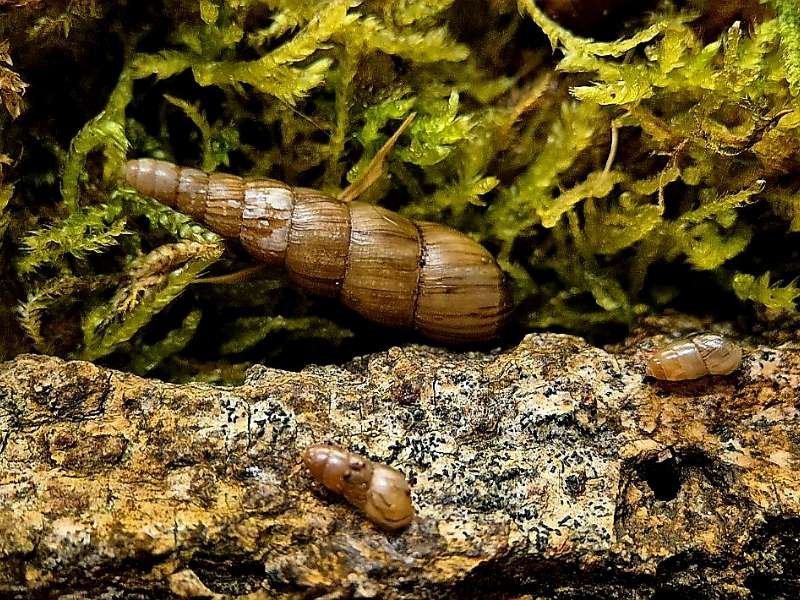
Ceras dautzenbergi ‘Dautzenberg’s Snail’
Price range: £6.50 through £27.50
Scientific Name: Ceras dautzenbergi
Common Name: Dautzenberg Snail
Ceras dautzenbergi is an attractive tropical land snail known for its elongated banded shell, active behaviour, and unusual live-bearing reproduction. Additionally, its elegant appearance and fascinating natural history make it a highly desirable species for naturalistic enclosures and specialist snail collections.
🐌 Live-Bearing Land Snail | 🌍 West African Species | 🌿 Excellent Naturalistic Display Species
Description
Scientific Name: Ceras dautzenbergi
Common Name: Dautzenberg Snail
Young between 0.5-2cm
Ceras dautzenbergi, commonly known as the Dautzenberg Snail, is a striking tropical land snail prized for its elongated shell, attractive banded colouration, and unusual appearance. This species was named in honour of the renowned French malacologist Philippe Dautzenberg, whose work significantly contributed to the study of terrestrial and marine molluscs.
Native to tropical regions of West Africa, Ceras dautzenbergi stands out from many commonly kept land snails due to its elegant shell shape and distinctive markings. The shell typically displays warm brown, tan, and amber tones arranged in attractive bands, creating a beautiful natural appearance that makes this species highly desirable among snail enthusiasts.
Unlike larger giant African land snails, this species remains relatively slender and graceful in appearance. Consequently, it makes an excellent display animal for naturalistic terrariums and specialist mollusc collections. Furthermore, its active nature and attractive shell patterning ensure it remains visible and interesting to observe.
Native Habitat
Ceras dautzenbergi originates from tropical West Africa, where it inhabits humid forests and woodland environments rich in leaf litter, fallen wood, and decomposing vegetation.
These habitats provide stable humidity, abundant food sources, and shelter from extreme environmental conditions. As a result, this species thrives in well-established bioactive enclosures that replicate these natural conditions.
Care Information
This species thrives in a humid enclosure containing a deep substrate rich in organic material. Leaf litter, rotten hardwood, moss, and decomposing plant matter should form the foundation of the enclosure, providing both food and shelter.
Temperature: 22-26°C
Humidity: Moderate to high humidity with good ventilation
Diet: Leaf litter, decaying plant material, vegetables, fruit, fungi, and calcium supplements
Difficulty: Easy to Moderate
A constant source of calcium is essential for healthy shell development. Therefore, cuttlebone, oyster shell, limestone, or other calcium-rich materials should always be available.
While this species appreciates high humidity, adequate airflow remains important. Consequently, maintaining a moisture gradient alongside good ventilation generally produces the best long-term results.
Breeding Information
Ceras dautzenbergi can breed successfully in captivity when maintained under stable environmental conditions with adequate food, moisture, and calcium. Unlike many terrestrial snails, this species is live-bearing, giving birth to fully formed young rather than laying eggs within the substrate.
The juveniles emerge as miniature versions of the adults and begin feeding immediately on leaf litter, decaying organic matter, and other suitable foods. Furthermore, established colonies can increase steadily in size when provided with consistent environmental conditions and a nutrient-rich enclosure.
Regular access to calcium-rich foods is particularly important for both adults and developing young. Consequently, healthy, well-maintained colonies often reproduce reliably and can become self-sustaining over time.
Captive-Bred Details
All specimens are captive bred. Captive-bred Ceras dautzenbergi adapt well to established enclosures and support sustainable invertebrate keeping.
With its elegant shell shape, attractive banded colouration, and fascinating behaviour, Ceras dautzenbergi stands out as one of the most beautiful tropical land snails available in the hobby. Whether maintained in a naturalistic display enclosure or incorporated into a bioactive ecosystem, this remarkable species offers a unique and rewarding experience for snail enthusiasts and collectors alike.
Captive Bred
Additional information
| Amount | 1, 3, 5 |
|---|
Reviews
There are no reviews yet.